• Zur Metanavigation
  • Zur Hauptnavigation
  • Zur Suche
  • Zum Inhalt
  • Zur Subnavigation
  • Zum Seitenfuß
  • University of Hamburg
  • For journalists
  • Staff Service Portal0
  • STiNE
https://www.kus.uni-hamburg.de/aktuelles.json?recentnews=true
  • Institutions and target groups
    • Einrichtungen
      • Faculties

        • Faculty of Law
        • Faculty of Business, Economics and Social Sciences
        • Faculty of Medicine
        • Faculty of Education
        • Faculty of Humanities
        • Faculty of Mathematics, Informatics and Natural Sciences
        • Faculty of Psychology and Human Movement Science
        • University of Hamburg Business School
      • Services

        • Study Information Net STiNE
        • Surfmail
        • Exchange
        • Staff Service Portal
        • Learning Platforms
        • Katalogplus – Catalogue of Hamburg Libraries
        • SharePoint
      • Student facilities and services

        • Campus Center
        • Career Center
        • PIASTA
        • AStA (student council)
        • University Sports
        • University Music
        • Family Office
        • University Language Center
        • General Languages
        • Office of Affairs for Students with Disabilities or Chronic Diseases
        • Departmental libraries
        • Healthy Campus
      • Further facilities and services

        • The Cluster of Excellence CLICCS
        • The Cluster of Excellence CUI
        • The Cluster of Excellence Quantum Universe
        • The Cluster of Excellence Understanding Written Artefacts
        • Hamburg Research Academy
        • Pier Plus
        • Hamburg Center for University Teaching and Learning (HUL)
        • Hub for Crossdisciplinary Learning (HCL)
        • CEN
        • Museums and collections
        • University Archives (in German)
        • Regional Computing Center (RRZ)
        • University Administration
        • Knowledge Exchange Agency
        • The Unikontor Shop (in German)
    • Target groups

      • Prospective students
      • Students
      • International prospective students
      • Young researchers
      • Researchers
      • Instructors
      • Staff
      • Prospective continuing education students
      • Alumni
      • Journalists
      • Refugees (in German only)
    Close
  • /sitemap.json
University of Hamburg - to research, to teach, to educate and form, to homepage
Knowing Vaccines
  • About
  • Research
  • News
  • Team
  • Contact

Photo: US Department of Defence (public domain)

  1. UHH
  2. Humanities
  3. Knowing Vaccines
  4. Team

Team

Project leaders & supervisors

Prof. Dr. Ulf Schmidt

Prof. Dr. Ulf Schmidt (Speaker) is Professor of Modern History at the University of Hamburg and a Fellow of the Royal Historical Society. His research interests are in the area of the history of modern medical ethics, warfare and policy in twentieth-century Europe and the United States. He is especially interested in the history of authoritarian regimes and dictatorships. He has published widely on the history of Nazi Germany, the history of human experimentation during the Cold War, the Nuremberg Doctors’ Trial and the Nuremberg Code, the history of eugenics and euthanasia, and the history of propaganda. He is the author, among others, of “Medical Films, Ethics and Euthanasia in Germany, 1933–1945” (2002); “Justice at Nuremberg: Leo Alexander and the Nazi Doctors’ Trial” (2004); “Karl Brand: The Nazi Doctor. Medicine and Power in the Third Reich” (2007); “Secret Science. A Century of Poison Warfare and Human Experiments” (2015); “Propaganda and Conflict: War, Media and the Shaping of the Twentieth Century” (2019), and “Ethical Research: The Declaration of Helsinki, and the Past, Present, and Future of Human Experimentation” (2020), published with OUP. He is one of the PIs of the ERC Synergy project on “Taming the European Leviathan: the Post-War Legacy of Medicine and the Common Good”.

Prof. Dr. Gertraud Koch

Prof. Dr. Gertraud Koch (Speaker) is Professor of Anthropological Studies in Culture and History at University of Hamburg. She has studied digitization as social and cultural phenomenon since the 1990s. In her research she combines approaches from Science and Technology Studies, Digital Humanities, Media Archeology, and Critical Data Studies and with an emphasis on methodological and theoretical frameworks (e.g. Digitisation. Theories and concepts for empirical cultural research, 2017). Another research is diversity social inclusion (e.g. Pathways to empathy 2013, with Stefanie Everke Buchanan). Her research on intangible cultural heritage and memory making link to her activities in the German Commission for UNESCO, as member and Vize Chair of the Expert Committee Intangible Cultural Heritage. She is Coordinator of POEM. Participatory Memory Practices. Concepts, strategies and media infrastructures for envisioning socially inclusive potential futures of European Societies through culture. The Innovative Training Network, funded by Horizon 2020 MSCA, addresses the urgent need of experts in the heritage sector who are qualified for working with the mediatized memory ecology, the changing socio-technical, organisational, legal, economic, and ethical frameworks for the use of cultural materials.

Prof. Dr. Katrin Fahlenbrach

Prof. Dr. Kathrin Fahlenbrach is professor for media studies at the Department for Media and Communication at the University of Hamburg. Her main research fields are: emotion and cognition in audiovisual and digital media; embodied metaphors in pictures and audiovisual media; media icons in mass media and online media; visual performances and the role of images in protest movements and online-activism. Her works include (2019) Medien, Geschichte, Wahrnehmung. Ein Lehrbuch zur Mediengeschichte. Wiesbaden: Springer VS-Verlag. (2010) Audiovisuelle Metaphern. Zur Körper- & Affektästhetik in Film und Fernsehen. Marburg: Schüren-Verlag; edited volumes: (2016) Embodied Metaphors in Film, Television, and Video Games: Cognitive Approaches (New York/London: Routledge). (2017) Protest Cultures. A Companion. Oxford/New York: Berghahn Books. (together with Martin Klimke, Joachim Scharloth).

Prof. Dr. Otto Habeck

Prof. Dr. Joachim Otto Habeck teaches social anthropology at Universität Hamburg. His research interests comprise the nexus of indigenous land use and permafrost; pastoralism in northern Eurasia and Mongolia; agrarian history in socialist societies; notions of “culture” (cultivatedness), gender and lifestyle in diverse regional settings. He served as German representative in the Social and Human Working Group of the International Arctic Science Committee. Within the Horizon-2020 Project CHARTER (Drivers and Feedbacks of Changes in Arctic Terrestrial Biodiversity) Habeck is lead scientist of Work-Package 3, investigating the social-economic dynamics of environmental change in reindeer-herding communities. He has also conducted research on cultural aspects of masculinity and the body, on alcohol consumption and hangover. Among other publications, he has written monographs about Arctic pastoralism and the concept of culture in Russia, including What it Means to Be a Herdsman: the practice and image of reindeer husbandry among the Komi of Northern Russia (2005) and Das Kulturhaus in Russland: postsozialistische Kulturarbeit zwischen Ideal und Verwahrlosung (2014). He is co-editor of Nomadic and Indigen­ous Spaces: productions and cognitions (Ashgate, 2013) and editor of Lifestyle in Siberia and the Russian North (Open Book Publishers, 2019).

Supervisors

Prof. Dr. Katrin Fahlenbrach

Prof. Dr. Kathrin Fahlenbrach is professor for media studies at the Department for Media and Communication at the University of Hamburg. Her main research fields are: emotion and cognition in audiovisual and digital media; embodied metaphors in pictures and audiovisual media; media icons in mass media and online media; visual performances and the role of images in protest movements and online-activism. Her works include (2019) Medien, Geschichte, Wahrnehmung. Ein Lehrbuch zur Mediengeschichte. Wiesbaden: Springer VS-Verlag. (2010) Audiovisuelle Metaphern. Zur Körper- & Affektästhetik in Film und Fernsehen. Marburg: Schüren-Verlag; edited volumes: (2016) Embodied Metaphors in Film, Television, and Video Games: Cognitive Approaches (New York/London: Routledge). (2017) Protest Cultures. A Companion. Oxford/New York: Berghahn Books. (together with Martin Klimke, Joachim Scharloth).

Prof. Dr. Otto Habeck

Prof. Dr. Joachim Otto Habeck teaches social anthropology at Universität Hamburg. His research interests comprise the nexus of indigenous land use and permafrost; pastoralism in northern Eurasia and Mongolia; agrarian history in socialist societies; notions of “culture” (cultivatedness), gender and lifestyle in diverse regional settings. He served as German representative in the Social and Human Working Group of the International Arctic Science Committee. Within the Horizon-2020 Project CHARTER (Drivers and Feedbacks of Changes in Arctic Terrestrial Biodiversity) Habeck is lead scientist of Work-Package 3, investigating the social-economic dynamics of environmental change in reindeer-herding communities. He has also conducted research on cultural aspects of masculinity and the body, on alcohol consumption and hangover. Among other publications, he has written monographs about Arctic pastoralism and the concept of culture in Russia, including What it Means to Be a Herdsman: the practice and image of reindeer husbandry among the Komi of Northern Russia (2005) and Das Kulturhaus in Russland: postsozialistische Kulturarbeit zwischen Ideal und Verwahrlosung (2014). He is co-editor of Nomadic and Indigen­ous Spaces: productions and cognitions (Ashgate, 2013) and editor of Lifestyle in Siberia and the Russian North (Open Book Publishers, 2019).

Post-Docs

Dr. Lesley Branagan

I am a postdoctoral social anthropology researcher, focused on medical anthropology and long-term ethnographic research in India. My research examines illness, care and contested forms of medical knowledge and authority, through an interdisciplinary approach that brings medical anthropology into dialogue with political economy, science and technology studies, theories of the state, gender, kinship, religion and morality. 

My PhD, done in a co-tutelle arrangement with Leipzig University and Macquarie University in Australia, explored how marginalised women in low-income Delhi neighbourhoods mobilise kinship, gender, and local healing systems to assemble alternative ecologies of care amid faltering public healthcare and gendered hierarchies of authority and care. My master degree investigated the impact of new government policies to introduce psychiatric services within a south Indian faith-healing temple.

My postdoctoral research in Hamburg University’s Knowing Vaccines project examines the social dynamics and ethics of pandemic response and vaccination in Europe, focusing on questions of biopolitics, moral claims, contested voice and recognition, particularly concerning vaccine-related illnesses.

I am also advancing a research project on healthcare, rights and ritual practice in the making of gendered lives in a South Indian transgender community.

Contact: lesley.branagan@uni-hamburg.de

PhD-Students

Dr Carolin Albers
Institute for Empirical Cultural Studies
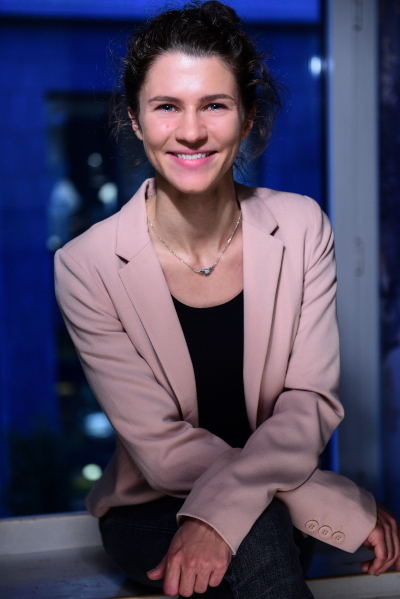
Carolin Albers is an interdisciplinary researcher with a background in medicine and anthropology, driven by an interest in the intersections of health and society. Before entering the realm of the medical humanities, she studied medicine at Charité Berlin and Istanbul University. While she has practised in different medical disciplines, she has always been fascinated by the psychiatric field and its entanglements with larger-scale problems in society. Adding the anthropological lens through a Master’s in Medical Anthropology and Sociology at the University of Amsterdam allowed her to expand her critical perspective from the local to the global, from the individual to the structural. Her main research interests include discrimination, stigma, knowledge production, and social justice, which she also explores in her doctoral thesis called "Stigma and the vaccine: unknowns around marginalisation and mental health in pandemic times".

Contact: carolin.albers-1"AT"uni-hamburg.de

Nataliya Aluferova
Institute of Social and Cultural Anthropology

Nataliya Aluferova is a social researcher whose research interests lie in the field of micro-sociology and anthropology of feelings. She received her bachelor’s degree in Sociology at the “Higher School of Economics” in St Petersburg. Her bachelor’s research examined how students’ inattention is built into the structure of social interactions in a classroom and how students challenge the dominant behaviour of the teacher, trying to change the balance of power. Nataliya got her master’s degrees in Cultural Anthropology (at the European University of St Petersburg) and in Sociology (within the joint program of Manchester University and Moscow School of Social and Economic Sciences). Using the method of participant observation in a small rural community in central Russia, she investigated how privacy boundaries are connected with feelings of shame and embarrassment. Nataliya's PhD project is "(Dis)Trust and suspicion: perceptions of vaccinations among Russian-speaking people in Germany". In this research, feelings of trust and distrust will be used as analytical categories to explore experiences with the German healthcare system and vaccination processes.

Contact: nataliya.aluferova"AT"uni-hamburg.de

See more at the Institute of Social and Cultural Anthropology's webpage.

Peter Banks

Department of History

Peter Banks is a history scholar interested in studying the relationship between propaganda and the spatial environment, and its subsequent cultural experience. He studied both his Bachelors and Masters at the University of Kent in the United Kingdom. For his Masters dissertation he examined the Berlin 1936 and Munich 1972 Olympics, highlighting the ways in which both Games utilised the spatial environment as a means of propaganda. Such research involved analysis of landscape, architecture, images, and design. Peter's PhD-project is "Spatial Propaganda during the German Democratic Republic’s Poliomyelitis Vaccination Campaign".


Tobias Becker
Institute for Media and Communication

Tobias Becker is a media and cultural scholar and investigates how visuality shapes and is vice versa shaped by culture in everyday life. He studied cultural anthropology at the universities of Freiburg im Breisgau, Basel and Oslo. In his research on visual culture, he uses a qualitative and micro-level approach for close analyses of empirical findings. How history shapes and influences current forms of visual culture is of particular interest to him in order to explore the powerful intersections between past and present that are at play in the media surroundings and cultural imageries of contemporary daily life. Tobias’ PhD project “Visualities of Vaccination under Media Transitions” explores how depictions of vaccination have emerged and undergone changes over the course of media history.

Contact: tobias.becker"AT"uni-hamburg.de

See Institute of Media and Communication's website.


Florian Helfer
Institute for Empirical Cultural Studies
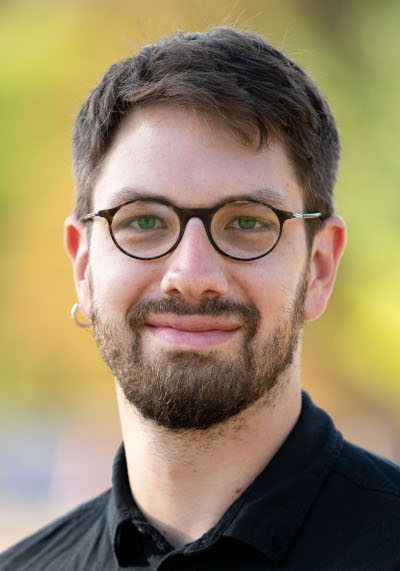
Florian Helfer is a Cultural Anthropologist interested in the study of moral norms in the fields of medical and policy anthropology, conducting research within medical and political fields. In his bachelor’s degree at the Goethe University in Frankfurt am Main, he focused on the areas of medical Anthropology and Science and Technology Studies. He continued his studies with a master’s degree in Cultural Anthropology at the University of Hamburg. For his thesis, he conducted ethnographic research with government employees working in cultural administration offices in the cities of Frankfurt, Hamburg, and Berlin, where he analysed forms of agency those government workers have within the processes of policy-making. Florian's PhD-project is "Should we all get Vaccinated? Ethical and moral discourse in a viral world".

Contact: florian.david.helfer"AT"uni-hamburg.de

For more information please see https://www.kulturwissenschaften.uni-hamburg.de/ekw/personen/florian-helfer.html.

  • Team

Last update: 11 November 2022

  • Feedback
  • Legal notice
  • Privacy statement
  • Accessibility
  • Site map

University of Hamburg

Innovating and Cooperating for a Sustainable Future in a Digital Age

  • Follow us on Instagram.
  • Follow us on Facebook.
  • Connect with us on LinkedIn.
  • Follow us on Mastodon.
  • Follow us on Bluesky.
  • Subscribe to our channel on YouTube.
    • Studies
    • Prospective students
    • Continuing education
    • Research
    • Teaching at UHH
    • Doctoral studies
    • Job opportunities
    • Knowledge exchange
    • University
    • Excellence
    • Faculties
    • Alumni
    • Contact
    • Campus Navigator
    • UHHApp
    • Emergencies, safety and security
    • Antidiscrimination
Go to family-friendly higher education institution audit
Go to internationalisation re-audit
Go to the Sustainability Audit page
Go to Diversity Audit
Go to System accreditation

© 2026 University of Hamburg. All rights reserved